Your first Passover (Hebrew: Pesach; 逾越节) in Israel can be overwhelming — supermarkets rearrange entire aisles, bread vanishes, and you may be invited to a long ceremonial dinner in a language you’re still learning. This guide walks Chinese-speaking newcomers through what’s happening and how to take part.
What Passover is#
Passover is the spring festival commemorating the Exodus from Egypt — the liberation of the Israelites from slavery, as told in the Book of Exodus. It lasts seven days in Israel (eight in the diaspora), and the heart of it is the seder (סדר, “order”): a ceremonial meal held on the first night, following a set script called the Haggadah.
The seder, step by step#
The seder follows 15 stages in a fixed order. You don’t need to memorise them — at any seder someone leads and everyone follows the Haggadah. The arc:
- Kadesh — the first cup of wine, with a blessing.
- Urchatz — washing hands.
- Karpas — a vegetable dipped in salt water (tears of slavery).
- Yachatz — breaking the middle matzah; half is hidden as the afikoman (children search for it later).
- Maggid — the heart: telling the Exodus story, including the Four Questions (Ma Nishtana) traditionally asked by the youngest, and the second cup.
- Rachtzah / Motzi / Matzah — washing again, then blessing and eating matzah (unleavened bread).
- Maror — eating bitter herbs (the bitterness of slavery).
- Korech — Hillel’s sandwich (matzah + maror).
- Shulchan Orech — the festive meal itself.
- Tzafun — eating the hidden afikoman.
- Barech — grace after meals, and the third cup.
- Hallel — songs of praise, and the fourth cup.
- Nirtzah — closing songs, ending with “Next year in Jerusalem.”
The four cups#
Four cups of wine (or grape juice) are drunk at set points, symbolising four expressions of redemption in the Torah. Everyone — including guests — drinks all four; grape juice is fine if you don’t drink alcohol.
A few key blessings (transliterated)#
- Over wine: Baruch ata Adonai, Eloheinu melech ha’olam, borei pri hagafen. ("…who creates the fruit of the vine.")
- Over matzah: …hamotzi lechem min ha’aretz. ("…who brings forth bread from the earth.")
Your host won’t expect you to know these — listen, follow, and join the “Amen.”
Chametz: what disappears and why#
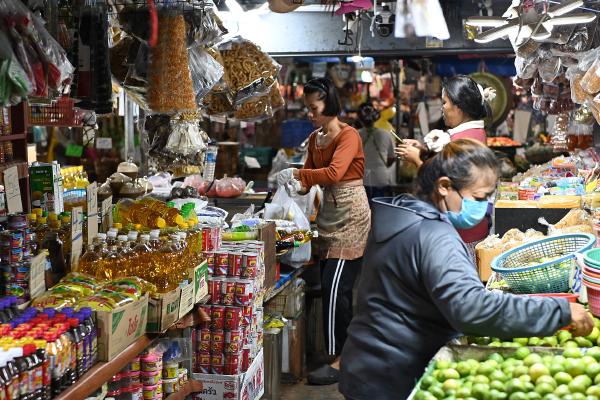
Chametz (חמץ) is leavened grain — bread, pasta, beer, most baked goods. During Passover observant Jews don’t eat, own, or keep chametz. That’s why supermarkets cover or close whole sections, and why you’ll see matzah everywhere instead.
Because you can’t simply own it, there’s a legal mechanism: selling the chametz (mechirat chametz). Before the holiday, people formally sell their leavened food to a non-Jew (arranged through a rabbi, often via a simple online form), then buy it back when Passover ends. If you keep a kosher home, your local rabbi or Chabad can include you in a community sale.
What to eat#
- Matzah instead of bread.
- Kosher-for-Passover (kosher l’Pesach) products — look for the label; during the season most Israeli supermarket stock is marked.
- Ashkenazi tradition also avoids kitniyot (rice, legumes, corn) during Passover; most Sephardi and Mizrahi communities do eat rice and legumes. This matters for Asian cooking — if you’re hosting mixed guests, ask which custom they follow before serving a rice dish.
Finding a Chinese-language Haggadah#
Following along is far easier with a translation. Community members have produced trilingual (English / Chinese / Hebrew) Passover materials, and Chabad publishes Haggadah text and explanations online that can be read alongside a Chinese translation. If you’re connected to the Chinese-speaking Jewish-learning community in Israel, ask there — people share digital Haggadot each spring. (We’ll link a community Chinese Haggadah here as one becomes publicly available.)
Quick glossary#
- 逾越节 / Pesach — Passover
- Seder (家宴/逾越节晚宴) — the ceremonial first-night meal
- Haggadah (哈加达) — the seder script
- Matzah (无酵饼) — unleavened bread
- Chametz (有酵食物) — leavened grain, avoided on Passover
- Maror (苦菜) — bitter herbs
- 逾越節快樂 / Chag Pesach Sameach — “Happy Passover”
Part of our Jewish-holiday series for the Chinese-speaking community in Israel. See also Counting the Omer (which begins on Passover) and Lag BaOmer, and our other guides.
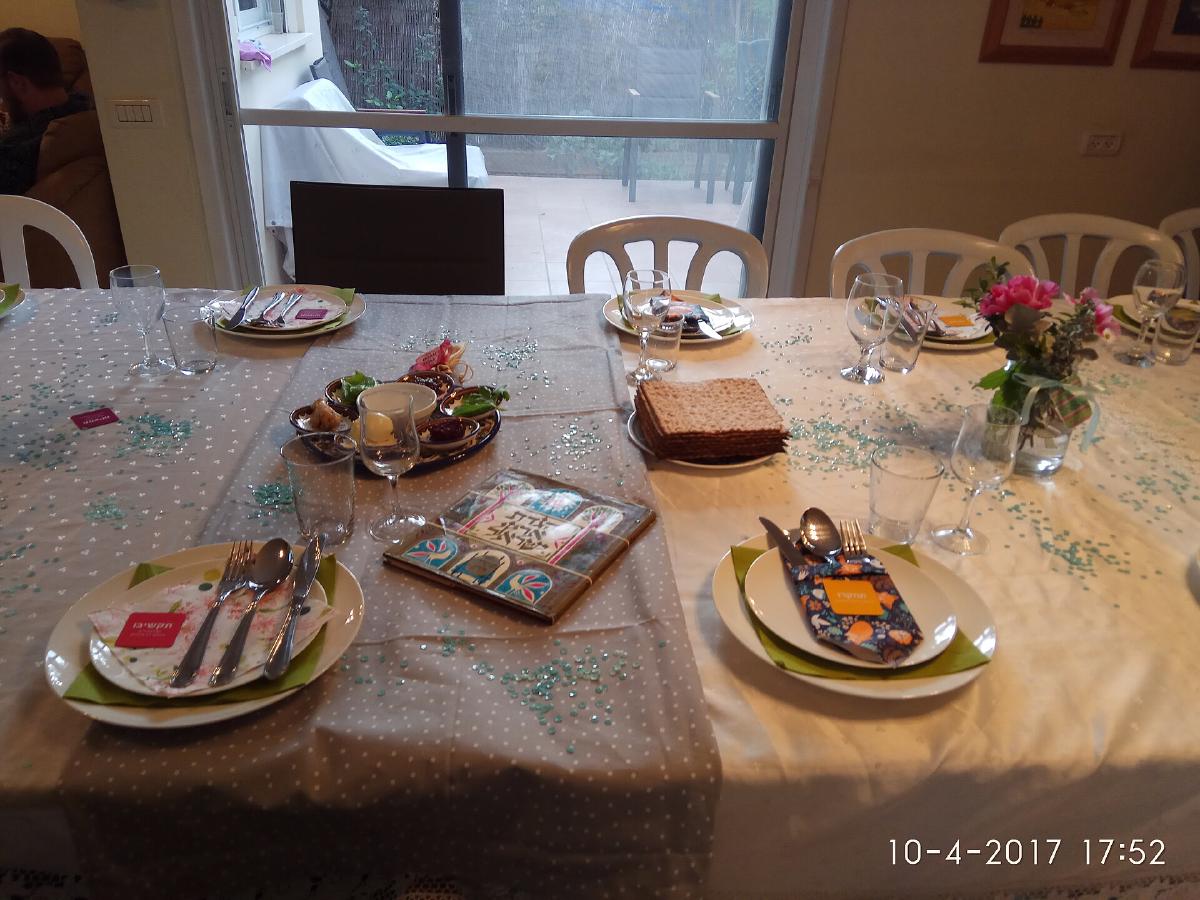
Photo: Passover seder table by Sigal Ben Amram / PikiWiki Israel, CC BY 2.5.