For a Chinese-speaker in Israel wanting to study Torah or Jewish law — whether out of faith, curiosity, or because you’re building an observant life — the biggest obstacle is rarely motivation. It’s finding trustworthy material in a language you read fluently. Hebrew and English dominate the field; Chinese resources exist but are scattered. This guide points you to the reliable starting places.
Note: This is an orientation guide, not religious instruction. For halachic questions and a structured learning path, work with a qualified teacher or rabbi.
Free online text libraries#
The best foundation is open, free, and high-quality:
- Sefaria — a vast free library of Jewish texts (Torah, Talmud, Mishnah, halachic works) with translations and cross-references. Its primary translations are English and Hebrew, but it’s the single most useful tool for studying any Jewish text, and you can read it alongside a Chinese dictionary or machine translation. Free apps for phone and web.
- Chabad.org — enormous library of Jewish learning, including a Chinese-language section with translated articles on Torah, holidays, and basic practice. A good entry point for readers who want explanation, not just source text.
Material specifically in Chinese#
Chinese-language Jewish content is growing but uneven. What’s reliably available:
- Chabad’s Chinese articles (above) — curated, readable, covering the basics of belief, holidays and practice.
- The Five Books of Moses in Chinese — a full Chinese translation of the Torah has been published (Oxford University Press China, 2009), useful as a reference text.
- Community-produced material — the Chinese-speaking learning community in Israel has worked on its own translations and study aids (including multilingual holiday booklets). These circulate within the community rather than being formally published; see the next section.
For more advanced halachic works (the Kitzur Shulchan Aruch as a primer, Peninei Halacha, and similar), Chinese translations are limited and often community- or project-based rather than commercially published. If someone points you to a specific Chinese edition, verify what it actually covers before relying on it — and cross-check against the original on Sefaria.
Study tools that help across the language gap#
- Read in parallel: open the same passage in Chinese (or machine-translated) and English/Hebrew on Sefaria, so you catch where a translation simplifies.
- Learn the key terms in transliteration, not translation — halacha, bracha, mitzvah, parasha — because they recur everywhere and rarely translate cleanly.
- Ask in community, where a fellow learner who’s a step ahead can save you weeks.
The Chinese-speaking learning community in Israel#
You don’t have to study alone. There is an active Chinese-language Torah-learning community in Israel — the 中文妥拉社群 / Torah in Chinese group — where learners share resources, ask questions, and (at times) run regular classes. It’s listed in our directory:
- Torah in Chinese (中文妥拉社群) — the community group’s directory entry.
Members have at various points offered short daily online classes and shared study materials; because these are run by individuals, we don’t publish personal contact details here — reach the group through its directory listing and ask.
Quick glossary#
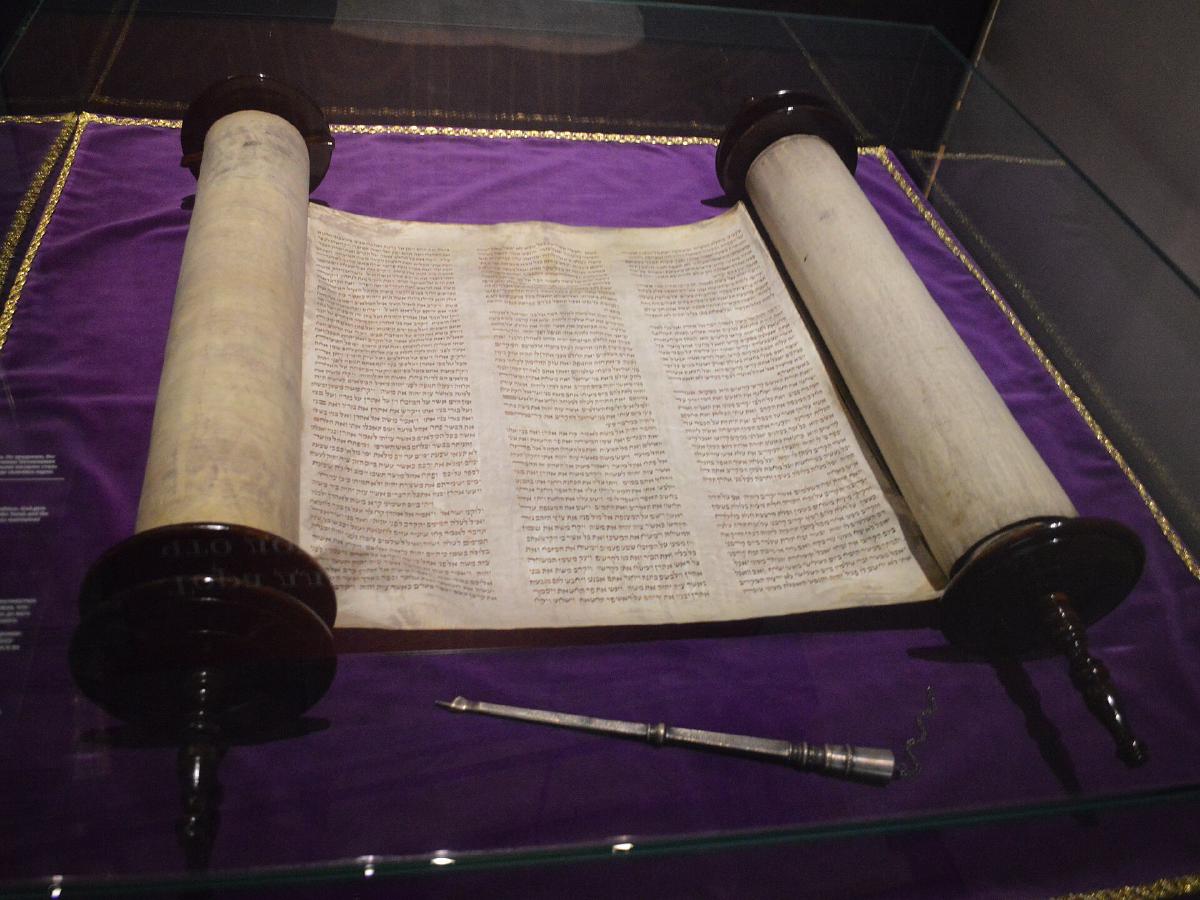
- 妥拉 / Torah — the Five Books of Moses; more broadly, Jewish teaching
- 哈拉哈 / Halacha — Jewish law
- 祝福 / Bracha — a blessing
- 诫命 / Mitzvah — a commandment
Part of our series for the Chinese-speaking community in Israel. See also our Jewish-holiday guides (Passover, Omer, Lag BaOmer) and the business directory.