Planning a trip to Israel from China, Taiwan, Hong Kong or elsewhere in Asia? The rules changed in 2025 — and what you need depends entirely on which passport you hold. This guide covers entry requirements, safety, kosher dining, Shabbat, money and getting around, written for the Asian community and visitors to Israel.
One-line version: Mainland-China passport holders need a B/2 tourist visa. Taiwan, Hong Kong, Macau, Japan, South Korea and Singapore passport holders travel visa-free but must obtain an ETA-IL online before departure.
Entry requirements — it depends on your passport#
Since 1 January 2025, Israel runs two parallel electronic systems: an ETA-IL (electronic travel authorization) for visa-exempt nationals, and an eVisa-B2 for nationals who need a visa. Here’s where the main Asian passports fall:
| Passport | What you need | Cost | Stay |
|---|---|---|---|
| Mainland China (PRC) | B/2 tourist visa (multiple-entry 10-year available) | ~CNY 250–500 | 90 days/visit, max 180/year |
| Taiwan (ROC) | Visa-free + ETA-IL | ₪25 | up to 90 days |
| Hong Kong (HKSAR) / Macau / BN(O) | Visa-free + ETA-IL | ₪25 | up to 90 days |
| Japan, South Korea, Singapore | Visa-free + ETA-IL | ₪25 | up to 90 days |
In all cases your passport must be valid for at least 6 months.
If you hold a mainland-China passport — the B/2 visa#
China and Israel signed a 10-year multiple-entry visa agreement, so an ordinary PRC passport holder can apply for a B/2 tourist visa valid up to 10 years (it expires 6 months before the passport does). Each visit allows up to 90 consecutive days, and no more than 180 days per year.
- Where: apply through the Israeli Embassy in Beijing or its designated visa centres. Since January 2025 a B/2 eVisa route also exists — see the official eVisa-B2 page.
- Documents: passport, application form, photo, financial proof, and an invitation letter from Israel or an itinerary issued by an Israeli-licensed travel agency.
- Cost & time: roughly CNY 250–500; allow 10–20 business days (apply at least a month ahead).
- Group tours: Israeli-licensed agents can apply for groups of 5–50 for Chinese nationals. Note that several Chinese agencies have voluntarily paused tour packages because of the security situation — that is a commercial decision, not an official ban.
If you hold a Taiwan, Hong Kong, Macau or BN(O) passport — visa-free + ETA-IL#
You do not need a visa for tourism or short business stays of up to 90 days — but since 2025 you must obtain an ETA-IL before you fly:
- Apply online at the official portal: israel-entry.piba.gov.il. Beware copycat sites that charge extra.
- Cost: ₪25, paid by credit card.
- When: at least 72 hours before departure; decisions usually arrive by email within 24–72 hours.
- Validity: up to 2 years (or until your passport expires).
Safety — check the live advisory before you book#
The security situation in Israel changes quickly. Do not rely on a static guide for this — check an official, dated advisory close to your travel date:
- From China: the China Consular Services Network (中国领事服务网) and the Chinese Embassy in Israel publish current risk levels and emergency notices.
- On the ground: Israel’s Home Front Command issues real-time alerts. If you hear an air-raid siren, go straight to the nearest shelter or protected space — do not stop to film.
- Areas near Gaza and the northern border carry the highest advisories; central cities are generally lower-risk but conditions shift. Know where the shelter is wherever you stay.
Kosher dining & what to eat#
Israeli food is outstanding, but a few rules shape where and when you eat:
- Kosher means meat and dairy are never mixed, and pork and shellfish are off the menu in kosher kitchens. A certified place displays a hechsher (rabbinate certificate) on the wall.
- Tel Aviv has plenty of non-kosher restaurants open all week; Jerusalem is more strictly kosher.
- Vegetarian/vegan: Israel is a world leader — Tel Aviv is one of the most vegan-friendly cities anywhere, and any dairy (“חלבי”) restaurant is meat-free by definition. Hummus and falafel are everywhere.
- Halal: found in Arab neighbourhoods and cities like Nazareth, Haifa and Jaffa.
Shabbat — plan around it#
From Friday afternoon to Saturday evening, much of the country pauses:
- Kosher restaurants close a few hours before sundown on Friday and reopen Saturday night.
- Public transport stops nationwide (Haifa and some shared taxis/“sherut” are exceptions). Trains and most buses do not run.
- Tel Aviv stays lively (beaches, non-kosher cafés, sherut taxis); Jerusalem goes very quiet. Stock up and plan transport in advance.
Money & tipping#
- Currency is the shekel (₪ / ILS). Cards are widely accepted; carry some cash for tips and small vendors.
- Tipping in cafés and restaurants is 10–15% (≈12%), usually left in cash even when you pay the bill by card. Taxi drivers don’t expect a tip.
Dress code#
Casual clothing is fine in Tel Aviv and at the beach. At religious sites (the Western Wall, churches, mosques), dress modestly: cover shoulders and knees; men cover their heads at Jewish sites, women may need a shawl. A large lightweight scarf is the single most useful thing to pack.
Getting around from the airport#
Ben Gurion Airport (TLV) is ~20 km from Tel Aviv:
- To Tel Aviv: the train from Terminal 3 reaches central Tel Aviv in ~18 minutes (not on Shabbat); a flat-rate taxi is ₪150.
- To Jerusalem: the fast train to Yitzhak Navon station takes ~25 minutes; a taxi runs up to ~₪350.
Official resources#
- ETA-IL & entry — Israel Population & Immigration Authority
- Israel Ministry of Foreign Affairs — ETA-IL announcement
- China Consular Services Network — Israel
- Chinese Embassy in Israel
- Taipei Economic & Cultural Office in Tel Aviv
Looking for somewhere to eat once you land? Browse our business directory of Asian restaurants, services and community organisations across Israel, and our other guides.
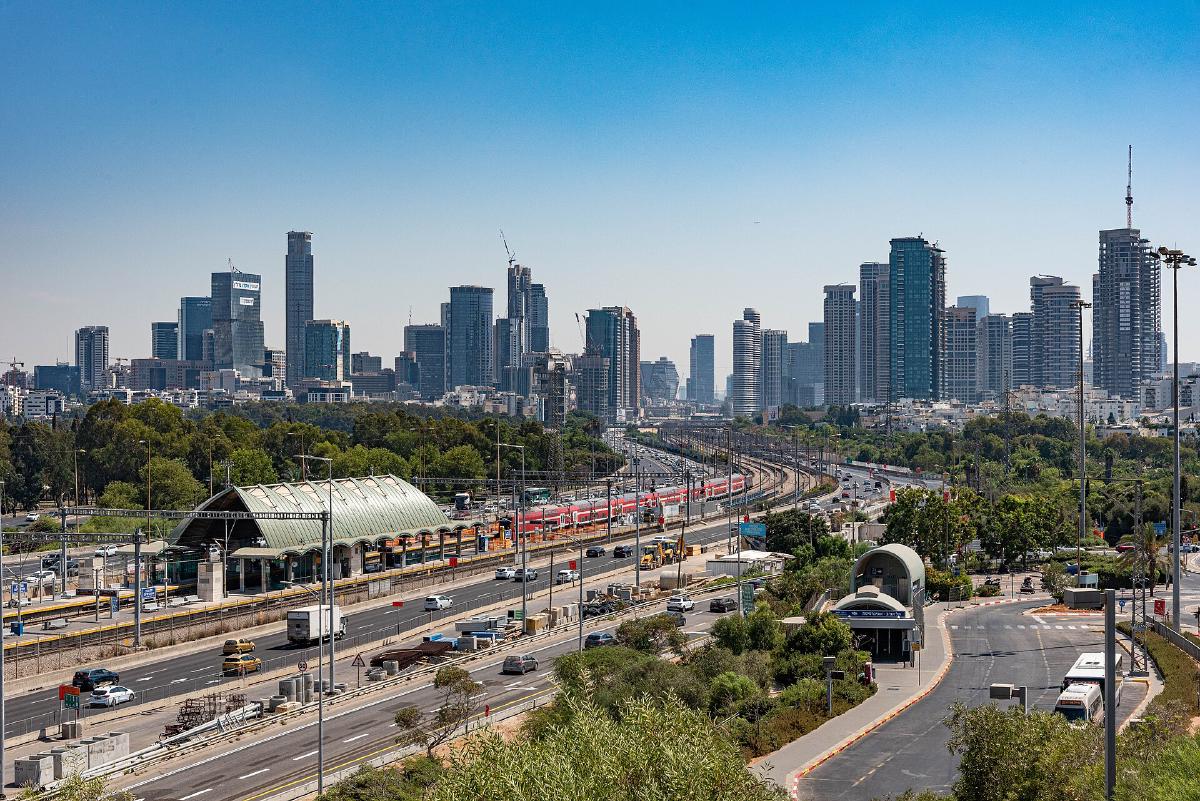
Photo: Tel Aviv skyline by Ynhockey / Wikimedia Commons, CC BY-SA 4.0.