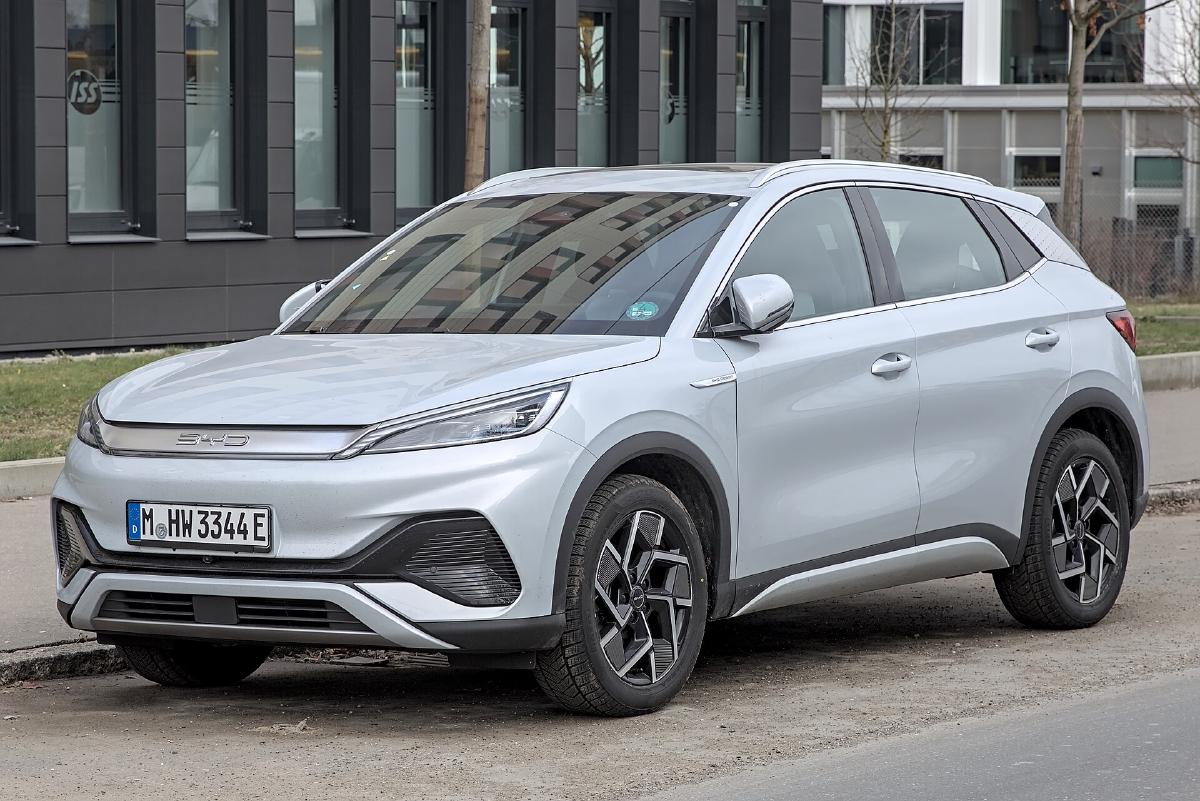
If you drive in Israel today, you are surrounded by Chinese cars — and increasingly Chinese electric cars. This isn’t a niche trend: it’s the single most visible expression of how deep the China–Israel economic relationship has become. Here’s the picture, with the numbers, the brands, and the questions worth asking.
Chinese EVs now dominate Israel’s roads#
By the end of 2025, Chinese-made electric vehicles accounted for about 74.9% of all EVs on Israeli roads, with Germany a distant second (~9.5%) and South Korea third (~7.5%) (Xinhua). Looking at new EV sales, Chinese brands took roughly 81–82% of the market in 2025, and analysts expect the share could approach 80% of EVs sold by the end of 2026 (China Daily).
This is one of the highest Chinese-EV penetration rates anywhere in the world — a remarkable position for a market of Israel’s size.
The brands to know#
More than 25 Chinese automakers now sell electric or hybrid vehicles in Israel. The standouts (registrations through November 2025) (Electric-Vehicles.com):
- Chery Group — the biggest force, via three brands. The Chery brand registered ~20,175 vehicles; its off-road sub-brand Jaecoo added ~13,516 (mostly plug-in hybrids); plus Omoda. The Jaecoo J7 has been among Israel’s best-selling cars overall.
- BYD — ~12,734 new-energy vehicles (8,069 fully electric + 4,665 plug-in hybrids); the BYD Atto 3 is a perennial bestseller.
- XPeng — the G6 crossover was among Israel’s single best-selling EVs.
- Plus Geely, MG (SAIC), Nio, Leapmotor and others.
For the longer story of how this happened, see our pieces on Chinese cars becoming Israel’s market leader and their rising market share, plus BYD’s fast-charging tech coming to Israel.
Why so dominant?#
Three things came together: price (Chinese EVs undercut Western and Korean rivals while matching range and features), a green-tax regime that favoured electric and hybrid imports, and fast-moving importers who locked up distribution early. The result is a market where, for many Israeli buyers, the realistic shortlist for an affordable EV is now almost entirely Chinese.
The bigger relationship: China is Israel’s #2 trading partner#
Cars are the visible tip of a much larger trade relationship. Bilateral China–Israel trade hit a historic high of around US$33 billion in 2025, keeping China as Israel’s second-largest trading partner globally (Israel Hayom; Eurasia Review).
The flows go both ways:
- China → Israel: vehicles (especially EVs and electric buses), consumer electronics, household appliances, ICT products.
- Israel → China / China seeking from Israel: expertise in agri-tech, drip irrigation, water management and desalination, solar energy and manufacturing robotics — exactly the areas where Israel is a world leader and China has scale (INSS).
One nuance worth noting: while trade is booming, new Chinese direct investment into Israel has slowed sharply — to under US$0.5 billion in the first ten months of 2025 — reflecting both U.S. pressure and Israeli caution over strategic assets (Al Habtoor Research Centre).
The security question#
The flip side of connected Chinese cars is data and security. Israel’s defense establishment has already moved to restrict Chinese vehicles around sensitive sites on the grounds that connected cars can collect location and sensor data — see our coverage of the defense-industry restrictions. This tension — cheap, capable cars vs. data-security concerns — is the defining policy debate around Chinese vehicles in Israel.
What about Xiaomi?#
The most-watched future entrant is Xiaomi, the electronics brand moving into cars (the SU7 and YU7). For Israel the timeline is around 2027, tied to European homologation, and a Xiaomi car raises the connected-ecosystem questions in their sharpest form. We cover the details in Xiaomi’s planned Israeli launch. The practical takeaway for buyers today: Xiaomi isn’t here yet, so if you want a Chinese EV now, look at the brands already established above.
Sources#
- Xinhua — Chinese-made EVs at 74.9% share in Israel
- China Daily — Chinese models ~81% of EV sales
- Electric-Vehicles.com — Chinese carmakers in Israel
- Eurasia Review — China–Israel cooperation prospects
- INSS — Trends in Israel–China trade
- Al Habtoor Research Centre — China’s investment posture in Israel
More on the Chinese community and businesses in Israel in our business directory and guides.
Photo: BYD Atto 3 by Alexander Migl / Wikimedia Commons, CC BY-SA 4.0.