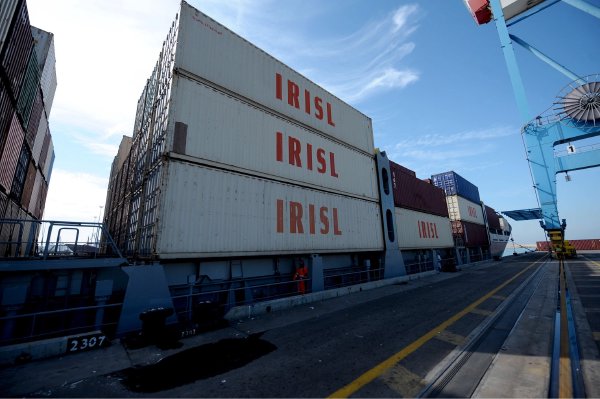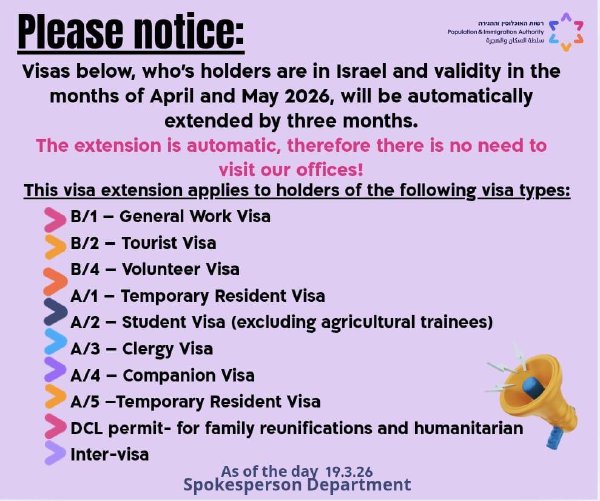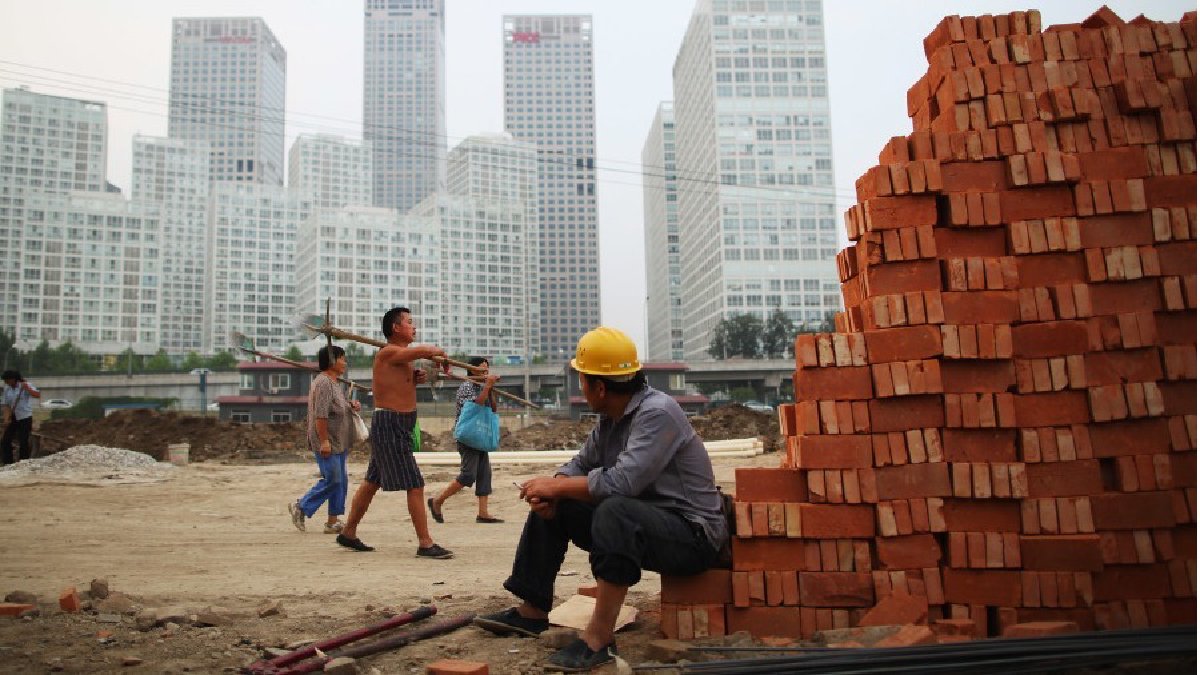
When Beijing ordered the evacuation of Chinese citizens from Israel in late March 2026, following Iran’s retaliatory strikes after the US-Israeli military operation, the response from tens of thousands of Chinese construction workers was unequivocal: they refused to leave.
An estimated 50,000 to 60,000 Chinese workers are employed in Israel’s construction sector. Since the start of the war, the Chinese embassy has been organizing evacuations via the Taba border crossing into Egypt, and on March 25 it called on all citizens to return home or transfer out as soon as possible. The vast majority chose to remain on job sites within range of Iranian rockets. Videos of workers explaining their decision — broadcast by NTD Television and shared widely on X — offered a stark window into the economic conditions driving their choice.
“We Want to Live with Dignity”#
“I’m working here, everything is normal,” one worker said in a video posted on X. “If there’s an air raid siren, you take cover. We’re used to it by now.” He went on: “Life isn’t just about having enough to eat. We want freedom. We want to live with dignity.”
In another clip filmed inside a workers’ dormitory, one man asked his roommate whether he planned to evacuate. The reply was blunt: “We could get bombed to death here, but we can’t go back and starve to death!” His companion laughed: “Nobody wants to go back!”
The videos triggered a wave of online commentary from Chinese internet users. “Compared to dying poor, being bombed is instant — dying in poverty is slow torture,” wrote one commenter. Another observed: “Being injured in a missile attack is a low-probability event, but poverty is like a sniper — almost every shot hits the head.” A third wrote: “For those without the red background in China, it’s not just dying poor, it’s dying in humiliation.”
Wages That Dwarf Anything Available in China#
The math behind their decision is straightforward. Chinese construction workers in Israel report earning between 30,000 and 80,000 yuan per month — roughly $4,100 to $11,000 — for 12-hour shifts. Israeli employers pay reliably and on time, workers said, a sharp contrast to the wage delays and withholding that have become widespread in China.
Demand for these positions is intense. Workers typically enter a lottery or pay agency fees of 50,000 to over 100,000 yuan just to secure a spot. One carpenter described spending 80,000-90,000 yuan to get to Israel and now earning 45,000 yuan a month. “I’m not going home until I’ve made two million,” he said, adding that when he was injured on the job, the hospital arranged a Chinese interpreter and provided excellent care.
Another worker, a former home renovator who lost his job in China, now earns 60,000 to 70,000 yuan a month laying tile. “In five years, that’s two million. Back home I could barely support myself, let alone my kid and my parents.”
A Bilateral Agreement Under Pressure#
Israel and China signed a bilateral labor agreement in March 2017, originally permitting up to 20,000 Chinese construction workers to address Israel’s housing labor shortage. Arrivals were disrupted by the October 2023 war, but resumed in mid-2025 with the first cohort of roughly 1,000 workers. By early 2026, the number of Chinese workers had far exceeded the original quota, reflecting Israel’s acute need for construction labor — the sector remains short an estimated 38,000 workers despite increases in foreign labor.
China’s Deepening Economic Crisis#
The workers’ refusal to evacuate is inseparable from conditions in China. In early March 2026, just days after the Lunar New Year, waves of migrant workers who had traveled to southeastern coastal cities returned home after failing to find employment. Videos showed large crowds boarding trains out of Shanghai, with workers describing the job market as simply impossible.
China’s official unemployment rate stood at 5.3% as of February 2026, but the real picture is far worse. According to the World Bank, using a poverty line typical of upper-middle-income economies, about 17% of China’s population was living in poverty as recently as 2021. The situation has since deteriorated sharply: businesses closing, wages being withheld, consumer spending collapsing, and unemployment surging across industries. In major cities like Shenzhen, Shanghai, and Beijing, growing numbers of laid-off workers — both white-collar professionals and migrant laborers — have been documented sleeping under overpasses, in subway entrances, and in 24-hour fast food restaurants.
For the Chinese workers in Israel, the calculation is clear. As one internet commenter put it: “They’d rather live within rocket range than go back to that kind of life.”
Sources: Vision Times, The Jerusalem Post