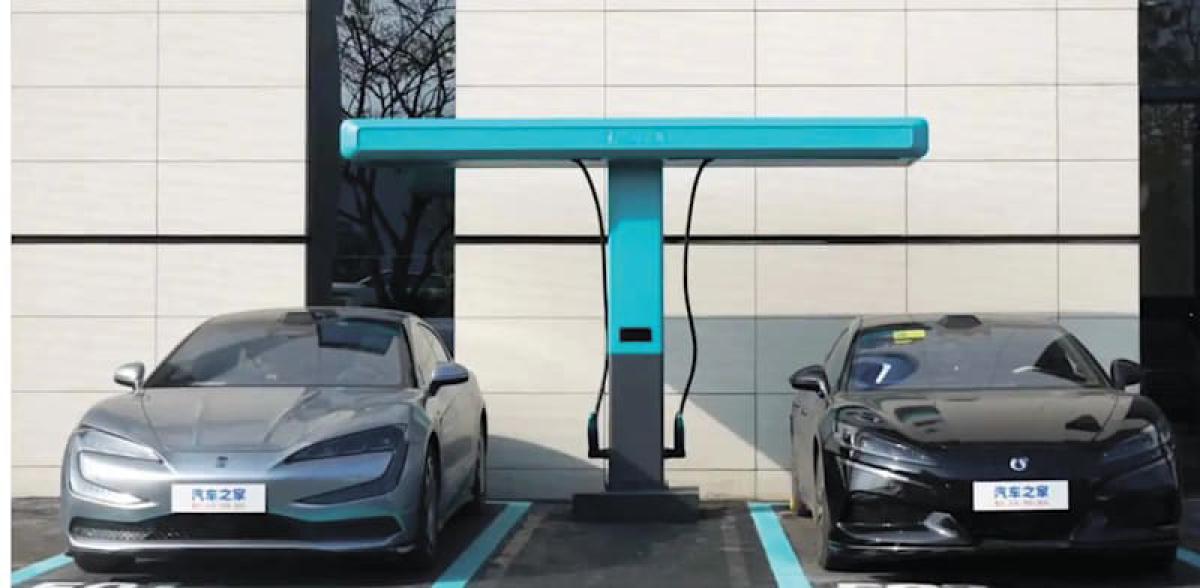
Chinese automaker BYD is preparing to bring its ultra-fast “Flash” charging technology to Israel as part of a broader European rollout planned for late 2026. The new chargers operate at 1.5 megawatts — nearly ten times the average rate of existing fast charging stations in the country and three times faster than Tesla’s newest V4 superchargers currently being piloted here.
What Flash Charging Means in Practice#
According to BYD, Flash-compatible batteries can charge from 10% to 97% in under ten minutes. More strikingly, just two minutes of charging can add hundreds of kilometers of range — roughly comparable to the time it takes to fill a gasoline tank.
The system has two components: the public charging stations themselves and a new generation of vehicle batteries designed to handle the extreme charging rates without overheating or degradation over time.
Israel in the First Wave#
BYD has announced plans to deploy approximately 3,000 Flash chargers across Europe in the final quarter of 2026. According to Chinese industry sources, Israel will be included in the first wave of that rollout.
The charging stations use integrated storage systems that gradually draw power from existing electrical networks, meaning they don’t require special grid infrastructure. They can also charge standard electric vehicles and handle multiple cars simultaneously.
Several new BYD models arriving in Israel in the coming months will support Flash charging, including a crossover slightly larger than the Seal U. Models from BYD’s premium Denza brand are expected to launch in Israel in early 2027. BYD says the new battery technology will not significantly increase vehicle prices.
Competition Heating Up#
BYD is not alone in the race. Geely, another major Chinese manufacturer, unveiled its own rapid charging technology in China last week. With chargers capable of up to 1.1 megawatts, the system will initially serve Geely’s premium brands Lynk & Co. and Zeekr through new-generation batteries in key models.
Tesla has been operating a pilot of its V4 superchargers in Israel for several months, supporting a theoretical maximum of 1.2 megawatts, though in practice the current stations distribute charge among vehicles at up to 250 kilowatts each. Israeli fuel chain Paz has also begun installing chargers with rates up to 400 kilowatts.
The arrival of Chinese ultra-fast charging infrastructure marks a significant step in the ongoing transformation of Israel’s automotive landscape, where Chinese brands already hold over a quarter of the new car market.
Source: Globes