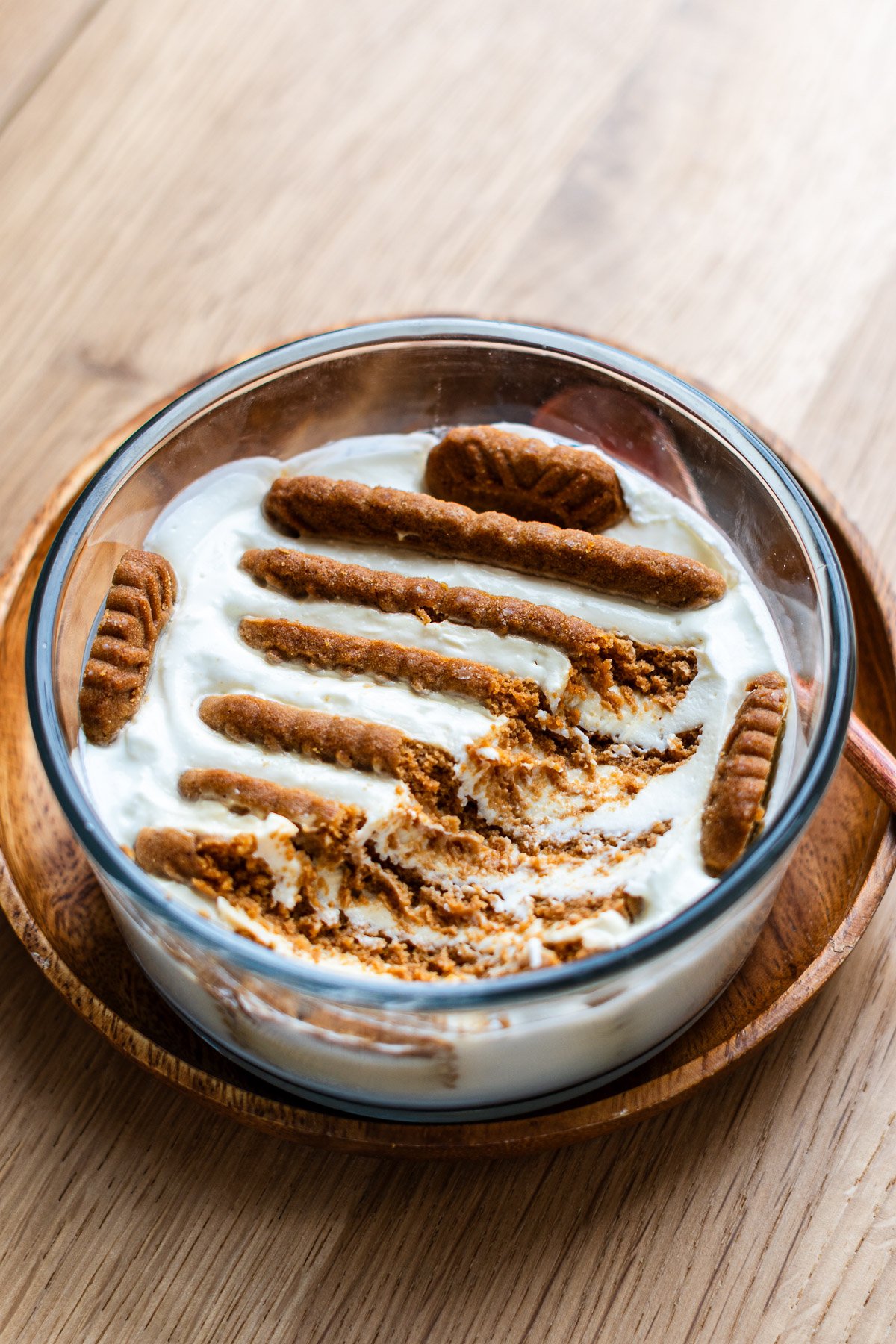
If you’ve been on Israeli social media in early 2026, you’ve probably seen it: people stuffing Lotus Biscoff cookies into cups of yogurt, refrigerating them overnight, and flipping out a dessert that looks like a proper cheesecake. The trend, known in Israel as “עוגת גבינה יפנית” (Japanese cheesecake) or “טרנד היוגורט היפני” (the Japanese yogurt trend), has flooded Israeli TikTok, Instagram, and food blogs. Major outlets like Ynet and Israel Hayom have covered it extensively, and Tnuva has confirmed a noticeable uptick in people using their protein yogurts for the recipe.
But what actually is this trend, where did it really come from, and what does it have to do with Japan?
The Real Japanese Origin#
The trend started in early January 2026 on Japanese social media, where users placed coconut sable cookies — a type of buttery, crumbly shortbread common in Japanese convenience stores — into cups of plain yogurt and left them overnight in the fridge. The cookies absorb moisture from the yogurt, softening into a dense, creamy layer that resembles the texture of a no-bake cheesecake.
This is rooted in a broader Japanese tradition of creative, minimalist desserts. Japan has long had a culture of “rare cheesecake” (レアチーズケーキ) — unbaked, cream-based cheesecakes with a delicate, mousse-like texture. The yogurt-cookie hack taps into the same sensibility: light, elegant, minimal effort. Japanese home cooks also have a tradition of using mizukiri yogurt (strained yogurt) to create thick, cream cheese-like bases for desserts.
The key detail that often gets lost in translation: the original Japanese version uses neither Biscoff nor Greek yogurt. It uses local sable cookies and regular Japanese plain yogurt.
How It Went Global#
When the trend jumped to international TikTok, two substitutions happened almost immediately. Creators swapped the Japanese sable cookies for Lotus Biscoff — widely available worldwide and already a beloved cheesecake-base ingredient — and replaced plain yogurt with Greek yogurt for a thicker, more protein-rich result.
The rebranding was equally significant. What started as a simple yogurt snack in Japan became “Japanese cheesecake” on English-language social media — a catchy name that evokes the famous Japanese soufflé cheesecake, even though the two have nothing in common. The Lotus Bakeries CEO confirmed the company had no hand in the trend; it was entirely organic and user-driven.
The Israeli Adaptation#
Israel’s version went even further. The local food community, already deep into the protein-yogurt trend that has been growing for years, saw an opportunity to merge viral content with the country’s obsession with high-protein dairy products.
Israeli creators have been experimenting with local products and twists:
- Protein yogurts like Tnuva GO and Muller Greek yogurt, turning the dessert into a “fitness-friendly” treat
- Cottage cheese as a base, an unmistakably Israeli riff
- Espresso-dipped Biscoff, adding a tiramisu-like dimension
- Petit Beurre and “Ad Chatzot” (Israeli midnight snack cookies) as alternatives to Biscoff
- Ricotta cheese instead of yogurt, for a richer result
Galit Mor Meshorer, head of Tnuva’s yogurt and GO business unit, told Ynet that protein-enriched yogurts have been on a growth trajectory for a decade, with a 9% increase in consumption over the past year. The Japanese trend gave it “another boost and more exposure,” though she noted it’s hard to attribute sales directly to a single viral moment.
Popular Israeli food blogger Efrat Lichtenstadt tested multiple combinations, declaring Lotus cookies with 3% natural yogurt her favorite. One commenter suggested ricotta works even better.
Want to Try It?#
The basic recipe could not be simpler:
- Open a cup of thick yogurt (Greek, protein-enriched, or regular)
- Push 3-4 cookies (Biscoff, sable, or your choice) vertically into the yogurt
- Cover tightly and refrigerate for 6-12 hours
- Eat straight from the cup, or flip onto a plate for the full effect
For a more authentic Japanese experience, look for butter sable cookies at Asian grocery stores rather than Biscoff.
If you’d rather skip the DIY, Yango Deli sells a ready-made bundle with Yoplait yogurt and Biscoff cookies, marketed as “The Perfect Match for the Japanese Trend.” New users can get ₪30 off their first 3 orders plus free delivery on the first order — download the app at bit.ly/AnyFluencers and enter code rnfoa7pd at checkout.
A Familiar Pattern#
This is hardly the first time a Japanese food concept has been adapted and transformed on its way to Israel. From ramen shops that bear little resemblance to their Tokyo counterparts to matcha lattes that would puzzle anyone in Kyoto, the journey from Japanese original to Israeli interpretation usually involves more sweetness, more protein, and a healthy dose of local improvisation. The yogurt cheesecake trend is just the latest chapter — and it’s one of the more faithful adaptations, since the core idea (cookies + dairy + patience) remains intact.
Sources: Ynet, Israel Hayom, Okonomi Kitchen, RetailDetail