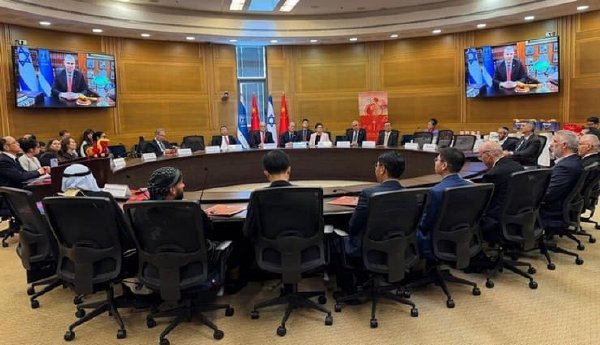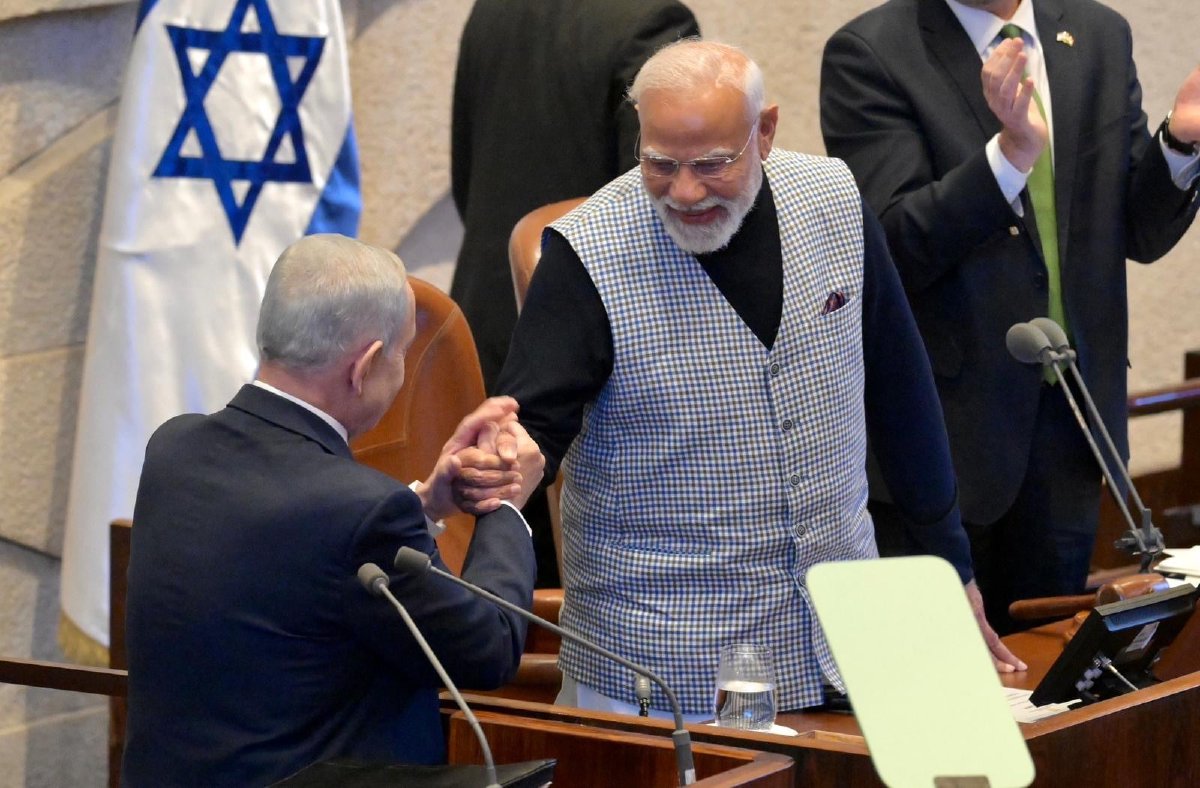
Indian Prime Minister Narendra Modi became the first Indian leader to address the Knesset on February 25, delivering a forceful speech that placed India squarely alongside Israel in its fight against terrorism and signaled a deepening strategic partnership between the two nations.
“Either the Jihadist Axis of Evil Will Break Us, or We Will Break It”#
Modi’s speech centered on an unequivocal message of solidarity. “India stands with Israel firmly with full conviction in this moment and beyond,” he declared, describing Israel as “a protective wall against barbarism.”
The Indian prime minister opened with a direct reference to the October 7 Hamas attack. “I carry with me the deepest condolences of the people of India for every life lost and for every family whose world was shattered in the barbaric terrorist attack by Hamas on October 7,” Modi said.
He then delivered what may have been the speech’s most striking line: “The massacre of October 7 made it absolutely clear: either the jihadist axis of evil will break us, or we will break it. And we are breaking it — and will break it.”
Netanyahu’s “Iron Alliance” and the IMEC Corridor#
Prime Minister Benjamin Netanyahu framed the visit in grand strategic terms, announcing that India and Israel would build an “iron alliance” against “extremist Islam.” Netanyahu also highlighted both nations’ roles in developing the US-backed IMEC (India-Middle East-Europe Connector) transport corridor.
“This maritime-land corridor can exist and flourish only if it passes through stable and secure countries,” Netanyahu said, positioning the India-Israel partnership as essential to the corridor’s viability.
Netanyahu expressed deep personal emotion about the visit, telling Modi: “I am deeply, deeply moved by your visit here today.” He called Modi “more than a friend, a brother” — an echo of their long personal relationship, which includes a famous 2017 barefoot walk along the Mediterranean shore. Netanyahu had later presented Modi with a photograph of that moment, declaring their “partnership is a match made in heaven and consecrated on earth.”
During the visit, both leaders posted in each other’s languages on X as they headed to an innovation event together.
MoU on Defense Cooperation and the “Six Alliances”#
Beyond the Knesset address, the visit included the expected signing of a memorandum of understanding to deepen defense cooperation between the two countries — a formalization of a relationship that has grown dramatically over the past decade.
Netanyahu also referenced his “Six Alliances” concept — a strategic framework linking Israel, India, Greece, Cyprus, one Arab nation (likely the UAE), and one African nation (potentially Ethiopia) — as part of his vision for a broader alliance of like-minded states.
Opposition Walkout — But Not for Modi#
The Knesset session was not without political drama. Opposition MKs boycotted the speeches by Netanyahu and Knesset Speaker Amir Ohana, protesting the exclusion of High Court President Isaac Amit from the ceremony. However, they returned to the chamber for Modi’s address. Opposition Leader Yair Lapid addressed Modi directly, stating the boycott had “nothing to do with you.”
Free Trade Agreement: Progress and Sticking Points#
The visit also saw movement on economic ties. A delegation from Israel’s Foreign Trade Administration traveled to New Delhi to negotiate a formal trade agreement between the two countries.
However, free trade talks face a significant obstacle: Israel opposes India’s demands to include provisions for foreign workers in any agreement, with concerns about uncontrolled immigration and lobbying influence within Israeli politics.
Sources: Times of Israel, Globes