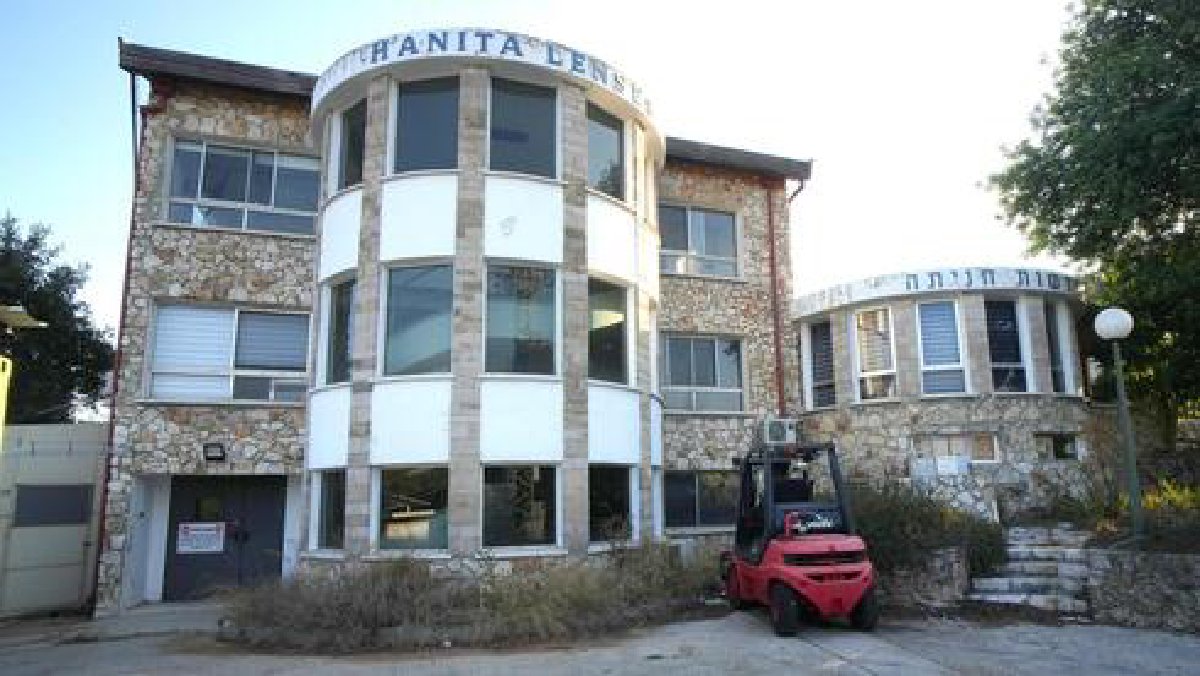
A lawsuit filed by members of Kibbutz Hanitah against Chinese investment fund Ballet Vision has brought to light a sweeping Chinese government policy: a blanket ban on all new investment in Israel. The kibbutz is seeking approximately $11 million in damages after the fund refused to exercise its contractual option to purchase the kibbutz’s remaining shares in the Hanita Lenses factory.
The Original Deal#
In 2021, Ballet Vision acquired a 74% stake in Hanita Lenses, a medical optics manufacturer specializing in intraocular lenses, for $35 million. Of that sum, $25 million went directly to kibbutz members and $10 million was invested into the factory. The agreement included a purchase option for the kibbutz’s remaining shares, valued at approximately $9.5 million.
Following the initial acquisition, Ballet Vision’s stake grew to roughly 80% through two subsequent dilution rounds. The first round brought $7 million in additional investment, with a second round of $8 million planned.
The Dispute#
In December 2024, kibbutz members exercised the purchase option, expecting Ballet Vision to buy out their remaining shares. Instead, Liu Yuxiao — the fund’s director who had become the factory’s de facto CEO in March 2025 — sent a letter to kibbutz community leader Meir Oz refusing to complete the transaction.
Liu’s explanation was direct: since the outbreak of fighting in October 2023, the Chinese government classified Israel as a “high-risk red category” zone, effectively banning all new Chinese investment in the country. She stated that under these conditions, the fund could not proceed with the purchase.
Liu also urged the kibbutz to focus on the factory’s survival rather than the share dispute, warning that the company faced an “operational crisis” requiring “complete focus.”
A Factory in Financial Trouble#
The financial picture of Hanita Lenses paints a grim situation. Over the past three years, the factory has accumulated approximately $15 million in losses and roughly $4 million in bank debt. By March 2025, the company’s cash reserves had dwindled to just $100,000.
The kibbutz members argue that they have been effectively sidelined from management decisions, with the board reportedly inactive and all operational control in the hands of Ballet Vision’s appointees. For their part, kibbutz members say they “desperately need funds following Operation Swords of Iron” and that the facility “requires rehabilitation assistance.”
China’s Investment Freeze on Israel#
The revelation that China has classified Israel as a high-risk investment zone is significant beyond this single dispute. While bilateral trade between China and Israel continues — reaching approximately $20 billion annually — Beijing’s decision to freeze new investments signals a meaningful shift in the economic relationship.
This classification reportedly came in the wake of the war that began in October 2023, aligning with a broader pattern of Chinese caution toward Israel. In recent months, China has also warned domestic companies against purchasing Israeli cybersecurity products and faced questions about Chinese participation in Israeli infrastructure projects.
The investment ban creates particular difficulties for Israeli companies and communities that entered into agreements with Chinese partners before the policy change. Kibbutz Hanitah’s situation illustrates this problem clearly: a deal struck in more favorable times is now caught between contractual obligations and geopolitical realities.
The case is ongoing.
Source: Calcalist