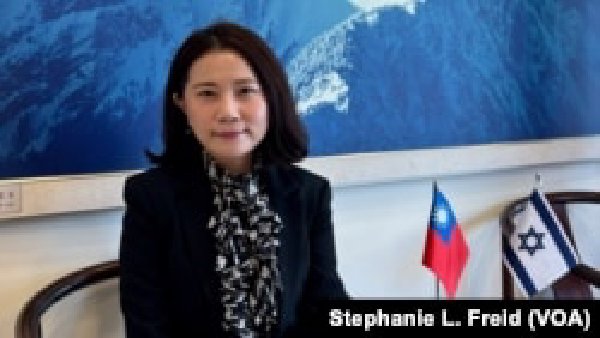
The Taipei Economic and Cultural Office (TECO) in Tel Aviv operates as Taiwan’s de facto embassy in Israel, managing all official ties between the two nations despite the absence of formal diplomatic relations. Since its establishment in 1993, TECO has become instrumental in fostering one of Taiwan’s most significant international partnerships.
Why No Formal Ties?#
Israel officially recognizes the People’s Republic of China and adheres to the “One-China” policy, which prevents it from maintaining formal diplomatic relations with Taiwan. However, this hasn’t stopped both sides from developing robust practical cooperation through representative offices.
In 1993, Taiwan and Israel simultaneously opened mutual representative offices - Taiwan’s Economic and Cultural Office in Tel Aviv and Israel’s office in Taipei. This arrangement marked the beginning of official, though non-diplomatic, relations that have only grown stronger over three decades.
TECO’s Multifaceted Role#
Political and Diplomatic Liaison#
TECO acts as Taiwan’s official representative to the Israeli government, Knesset members, think tanks, and civil society. Despite diplomatic constraints, it cultivates parliamentary friendships and facilitates unofficial political visits in both directions.
Economic and Technology Hub#
The office promotes trade, investment, and technology cooperation between Taiwanese and Israeli firms, particularly in high-tech sectors, semiconductors, cybersecurity, water technologies, and agri-tech. Taiwan and Israel have signed more than 30 trade and cooperation agreements, all coordinated through their representative offices.
Cultural Bridge#
TECO organizes cultural events, exhibitions, film festivals, and Taiwan-related lectures to increase Taiwan’s visibility in Israel. It facilitates university partnerships, student exchanges, and research cooperation with institutions like Reichman University and Hebrew University.
Consular Services#
Like a traditional embassy, TECO provides consular services to Taiwanese citizens in Israel, including passport renewals, document authentication, and emergency assistance. It also handles visa services and provides practical information for Israelis traveling to or studying in Taiwan.
Recent Intensification#
The relationship has notably intensified during and after the Gaza war, with TECO playing a central coordinating role:
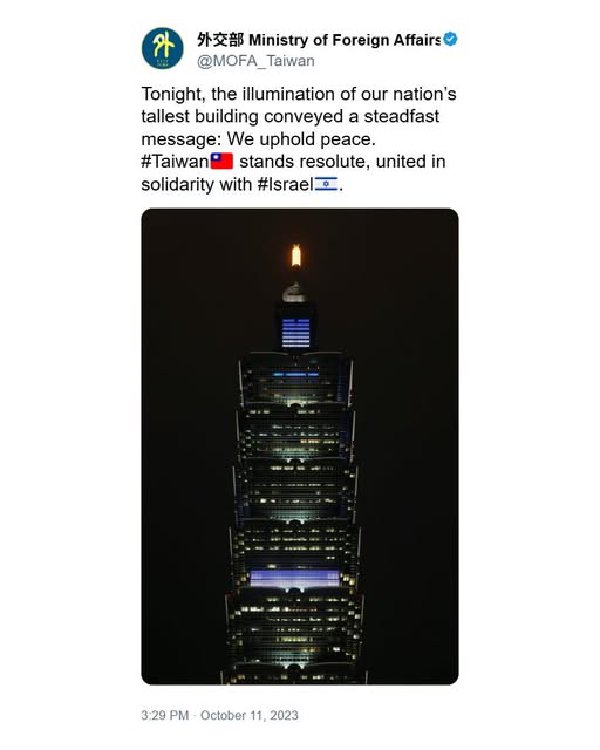
Solidarity During Crisis: Taiwan strongly condemned Hamas’s attacks on Israeli civilians and coordinated donations and public solidarity messages through TECO.
Academic Outreach: TECO has actively engaged students and faculty at Israeli universities, building pro-Taiwan networks in Israeli society beyond government channels.
Parliamentary Engagement: In 2025, Taiwan hosted multiple unofficial Knesset delegations. A September delegation led by MK Boaz Toporovsky delivered a statement signed by 72 Israeli legislators supporting Taiwan’s international participation.
Security Dialogue: Taiwan’s President Lai Ching-te has cited Israel as a model for missile defense, promoting a “T-Dome” concept modeled on Iron Dome. Former Taiwanese Deputy Defense Minister Fu Hong-hui reportedly visited Israel in secret to discuss advanced military technology transfer.
Shared Democratic Identity#
Analysts describe Taiwan and Israel as “students of survival” - small, high-tech democracies facing existential security challenges and partial international isolation. Both invest heavily in innovation and human capital as leverage for global indispensability.
Taiwan sees its support for Israel as solidarity among democracies resisting authoritarian pressure from China, Iran, and Russia. The relationship transcends mere economic interest, rooted in shared values and parallel challenges.
Looking Forward#
Despite political constraints from Israel’s relationship with China, both governments see strong incentives to deepen cooperation in high-tech, cyber, and defense-adjacent industries. Taiwan’s manufacturing ecosystem complements Israel’s R&D strengths perfectly.
TECO Tel Aviv stands at the center of this growing partnership, proving that formal diplomatic recognition, while valuable, isn’t essential for meaningful international cooperation. In an era of complex geopolitics, Taiwan and Israel demonstrate how shared values and mutual interests can forge powerful alliances through creative diplomatic arrangements.
Sources: INSS, BESA Center, Global Taiwan