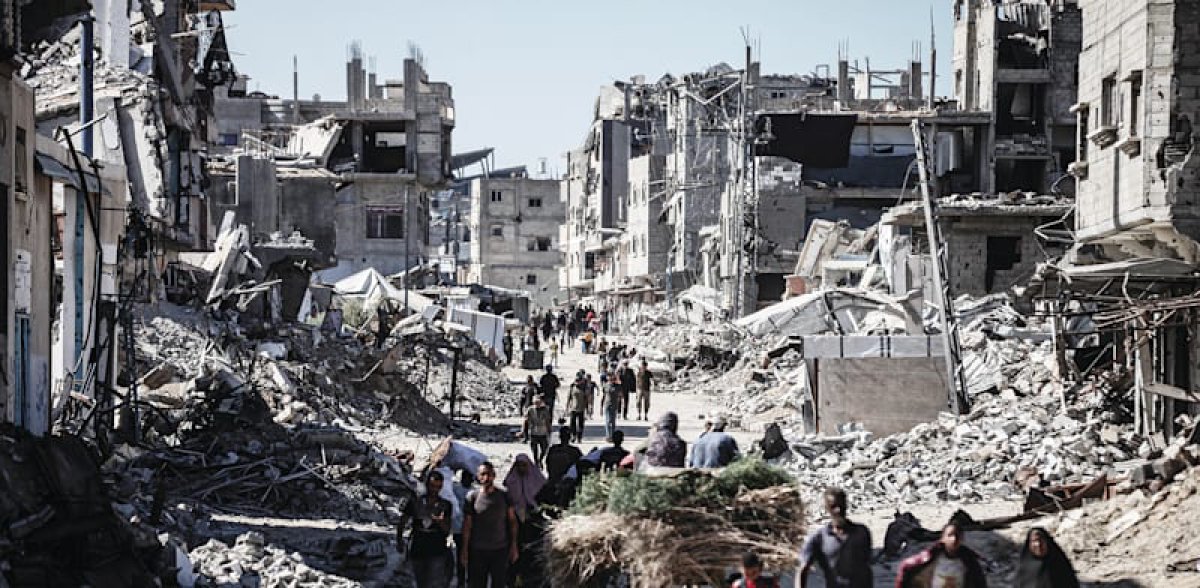
While international attention focuses on the US, Qatar, and Turkey in discussions about Gaza’s future, China has quietly positioned itself to benefit from the estimated $70 billion reconstruction effort through strategic tender wins and local partnerships.
Early Tender Success#
China’s involvement began with a United Nations Office for Project Services (UNOPS) tender in April for mobile homes. A Chinese company, Heike from Qingdao, won with a bid 50-60% lower than the second-place competitor. The tender required mobile homes equipped with living room, bedroom, and bathroom facilities.
More recently, the UN Development Agency (UNDP) held a tender for 45,000 mobile homes, attracting bids from companies across Italy, UK, Somalia, Jordan, Saudi Arabia, and elsewhere. The bid range was substantial: from Palestinian company Retaj’s $152 million to US company FTR’s $507 million.
Chinese Companies Dominate Results#
Results announced this week revealed that of the 12 lowest bids, nine came from Palestinian companies (seven being the cheapest), two from Egyptian companies, and one from Chinese company Shandong Weichang. However, sources familiar with the tender composition indicate that “each of these companies, whether Palestinian or Egyptian, uses Chinese goods.”
How China Competes on Price#
Chinese companies achieve dramatically lower prices through extensive government subsidies:
- 100% logistics subsidy: Beijing covers all export logistics costs through 2027
- 40% goods subsidy: The government subsidizes 40% of exported goods costs
- 15% tariff incentive: Additional payment covering approximately 15% of tariffs at destination countries
- Full coverage of raw materials transport and processing machinery costs
- Workforce grants: Additional support for labor in the field
The Chinese labor model for Gaza involves shipping component parts to Egypt for final assembly.
The Sinai Connection#
Chinese goods reach Gaza through El-Arish in Egypt, facilitated by influential local figures. One key player is Ibrahim Al Organi, a Bedouin entrepreneur known as “The King of the Rafah Border Crossing.” Al Organi’s construction company Abnaa Sinai won a UN Development Agency tender and maintains close ties with Egyptian intelligence through Mahmoud el-Sisi, the Egyptian president’s son.
According to the Financial Times, those wanting to bring goods into Gaza for years were required to work with Al Organi’s companies. The company was entrusted with upgrading Rafah border crossing facilities when Egypt controlled the area.
Broader China-Egypt Cooperation#
This economic maneuvering reflects deeper China-Egypt ties. China accounts for 30-40% of foreign investment in Egypt, and the two countries conduct joint military exercises. During the Gaza conflict, Chinese shipping giant Cosco was the only major company to comply with Houthi demands to avoid Israeli ports, while China continued purchasing over 90% of Iran’s oil exports despite US pressure.
The reconstruction dynamics illustrate how Israel faces losing both revenue and oversight from Gaza reconstruction while China captures economic benefits through multiple channels.
Source: Globes