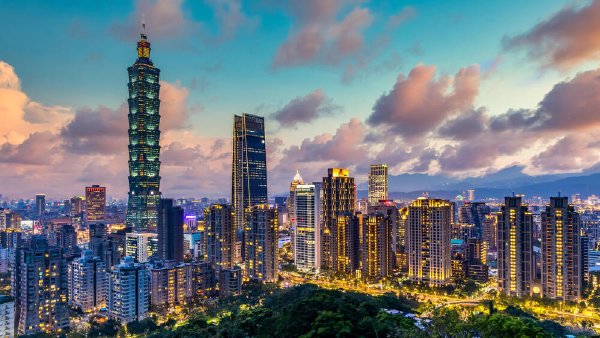
Since October 7, Israel has found itself navigating complex international relationships, with some traditional alliances strained. However, one partnership has only grown stronger: Taiwan. The small but technologically formidable island nation, nearly 8,000 kilometers away, shares remarkable parallels with Israel.
Both nations pursue aggressive technological innovation policies, view economic resilience as essential to national security, and operate under constant threat - Israel from an increasingly hostile Middle East, Taiwan from ever-present Chinese pressure.
A Partnership Built on Shared Values#
Abby Lee, Taiwan’s Representative to Israel, has witnessed this relationship strengthen during her three years in the country. “Over the past three decades, we’ve built strong ties in science, investment, education, and trade,” she explains. “This serves as an important foundation for the two nations to move forward.”
For Lee, the connection runs deeper than strategy. “Even though Israel is fighting on multiple fronts, it remains willing to share knowledge with like-minded countries like Taiwan - knowledge that is much needed as we face tremendous pressures from China through its hybrid toolkits.”
Taiwan has long been a global technology center, producing over 60% of the world’s semiconductors and nearly 100% of AI chips - earning it the nickname “the silicon shield.” Tech giants like NVIDIA, Amazon, Google, and Microsoft have all established presence on the island.
“Both countries lack natural resources. We have to invest in human capital and education - those are our weapons,” Lee emphasizes.
Complementary Strengths#
The economic relationship between Israel and Taiwan leverages their complementary expertise. “Israel is famous for startup innovation - taking ideas from zero to one. Taiwan, on the other hand, has the high-tech talent and industrial capacity to scale those ideas from one to infinity,” Lee explains.
Taiwan excels in hardware; Israel leads in software, cybersecurity, and AI. This synergy is evident in growing investments: Taiwanese giants like TSMC invest in Israeli semiconductor startups, while companies like Winbond, ASUS, and Vivotek open operations in Israel. Israeli firms including Nova, Radware, and Taboola reciprocate with Taiwan offices.
Patty Lin, Director of the Taiwan Trade & Innovation Center in Tel Aviv, describes Taiwan as “a very good place for Israeli startups to start if they want to enter the Asian market.” Unlike most such offices focused solely on trade, the Tel Aviv branch promotes innovation, connecting Israeli startups with Taiwanese companies monthly in semiconductors, AI, and medical technology.
From Silicon Valley to Hsinchu#
Dov Moran, the Israeli entrepreneur behind the USB flash drive and managing partner at Grove Ventures, has worked with Taiwan’s tech ecosystem for decades. “Taiwan became an important hub for all activities in East Asia. The people there are amazing - excellent engineers, incredibly hardworking, and extremely organized,” he says.
Moran’s connection dates to 1994 when he opened an office in Taiwan while leading M-Systems. “Israel is strong at entrepreneurship and ideation, but we struggle with execution. Taiwan excels at that. Their ability to perform and deliver is unmatched.”
Alon Webman, co-founder of Chain Reaction, a semiconductor startup with offices in Israel, the U.S., and Taiwan, emphasizes Taiwan’s government support. “The way that Taiwan supports its tech companies is something every country should learn from. It’s a national effort - Israel could benefit from adopting a similar approach.”
His company operates from Hsinchu Science Park near TSMC. “From day one, we needed strong connections with TSMC - they are the number one ASIC manufacturer in the world. The level of collaboration and access to talent is unmatched.”
Geopolitical Parallels#
For Taiwan, October 7 served as a stark reminder of vulnerabilities faced by small democracies in volatile regions. “Taiwan saw October 7 as more than just a regional conflict - it was a clash between democracy and terrorism and authoritarianism. We were among the first to express our solidarity,” Lee says.
China continues intensifying threats against Taiwan through military exercises, economic coercion, and cyber warfare. Taiwan’s semiconductor dominance serves partly as deterrence. “If China invades Taiwan, it would be catastrophic for the entire semiconductor industry. If you use an iPhone, that might be your last iPhone,” warns Moran.
Many in Israel’s tech sector see this as a model. Like Taiwan, Israel has long viewed innovation not merely as competitive advantage but as strategic defense. The goal: make global economic ties so deep and Israel’s technology so critical that its stability becomes an international priority.
The Future Partnership#
While China remains Israel’s largest trade partner, technology leaders increasingly view Taiwan as the stronger, more reliable partner. “China is behind Taiwan in almost everything related to deep tech and semiconductors. Israeli companies are moving towards Taiwan,” Moran observes.
Webman agrees: “Taiwan is a lighthouse for technology and manufacturing. The way they treat companies, the resources they provide - it’s something every country should study.”
As both nations navigate uncertain geopolitical waters, their partnership demonstrates how shared challenges and complementary strengths can forge powerful alliances. In an era where technology determines national security, Israel and Taiwan prove that innovation truly is a form of defense.
Source: CTech