As Israel’s war with Hamas in Gaza continues, international support has increasingly waned. However, Taiwan remains a steadfast supporter. In an interview with Voice of America, Taiwan’s representative to Israel, Abby Lee, explained that the commonalities between Israel and Taiwan are the glue that binds these two democratic entities together - chief among them being the existential challenges they both face from hostile neighbors.
Shared Experiences Despite Different Contexts#
On the surface, Taiwan and Israel might not seem to have much in common.
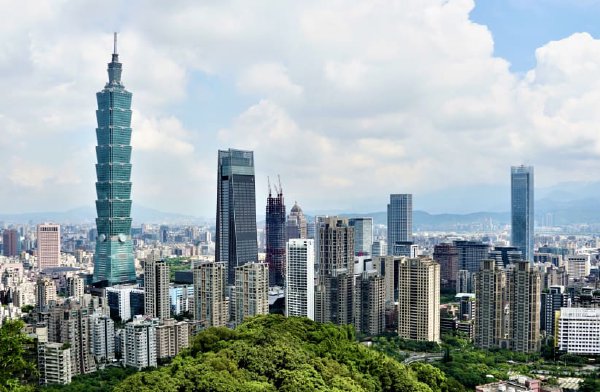
Taiwan is a Pacific island between the East China Sea and South China Sea, with nearly 23.42 million residents. It has experienced European and Japanese colonial rule throughout history and today has self-governing status, though Beijing views Taiwan as part of Chinese territory and opposes other countries establishing diplomatic relations with it.
Israel, bordered by the Mediterranean Sea to the west and Lebanon, Syria, Jordan, Gaza, and Egypt on its other sides, has a population of about 10 million - less than half of Taiwan’s. Israel was founded in 1948, and since then, the small country has been in a state of conflict with its surrounding neighbors.
Yet Representative Abby Lee sees the commonalities between Israel and Taiwan as the bond that ties them closely together.
Living Under Threat#
“Taiwan has lived under China’s military intimidation and threats for decades,” Lee said in her recent interview in Tel Aviv.
“If you are bullied at school, you don’t want to hide from your classmates and friends,” she elaborated. “China is our bully.”
Lee believes that Israel has faced existential challenges from the outside since its founding.
“Today, the challenge we see is democracy versus authoritarianism. Israel and Taiwan, these two countries, must deal with the challenges posed by volatile states like China, Russia, North Korea, and Iran,” she said.
Lee’s analogy is based on China’s continuous military exercises in Taiwan’s coastal waters. Beijing’s overt threats are seen as preparation for invading and controlling Taiwan.
In Israel, since the outbreak of war with Hamas in Gaza in October 2023, Iran and its proxies in Lebanon, Syria, and Iraq have intensified attacks on Israel, resulting in missile strikes, airstrikes, assassinations, and embassy explosions over the past year. Lee believes these escalating confrontations are intentional.
“We see the axis of evil - or the axis of turmoil - trying to act to undermine global order. We democratic countries must strengthen and coordinate our actions. Taiwan and Israel play key roles in defending frontline democracies and resisting terrorists,” she said.
Taiwan’s Alliance with Israel#
Since the outbreak of the Gaza war, China has made various statements and diplomatic efforts regarding the crisis. Through official statements, diplomatic activities, and media narratives, China has promoted itself as a regional peace advocate while also criticizing U.S. Middle East policy and military support for Israel.
As the war between Israel and Hamas in Gaza has exceeded 15 months, world leaders have increasingly turned away from supporting Israel. However, Taiwan remains unwavering in its support.
Tuvia Gering, a non-resident fellow at the Atlantic Council’s Global China Center, believes that in many ways, Taiwan sees itself in Israel - “two vibrant democratic entities both facing threats from hostile neighbors.”
“Both countries have strong economic and technological capabilities and are heavily dependent on U.S. military exports and diplomatic support,” Gering told Voice of America.
Lee agrees with this view. She describes Israel as a small democracy in the Middle East forced to stand on the front lines against terrorism and the Iranian regime.
“We see the parallels in the Middle East war,” Lee elaborated. “If we don’t show moral support, one day when we face the same situation or emergency, we will also need a lot of international moral support from like-minded countries and friends.”
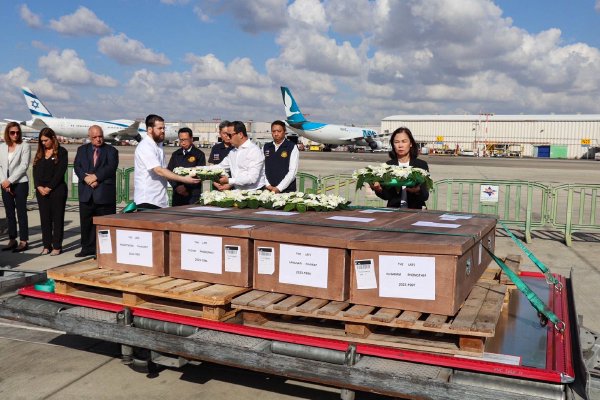
After Hamas’s terrorist attack on southern Israeli communities in October 2023, the Taiwan government immediately provided tens of thousands of dollars in aid. Recently, Taipei leaders pledged $500,000 to Israel for medical and communications projects.
Expectations for Support#
Does this mean Taiwan expects Israel’s support when it faces threats from China?
“We don’t ask friends to fight for us,” Lee clarified.
But Taipei leaders do hope that “like-minded democracies can unite and speak with one voice to increase the political cost of any potential invasion.”
“When we saw Russia invade Ukraine, we closely monitored developments because we knew the Chinese side was also closely watching the situation to assess the consequences if they invaded Taiwan,” Lee said.
Shipping Disruptions: A Shared Concern#
Israel and Taiwan also share the prospect of facing deliberate and aggressive shipping disruptions.
Since October 2023, Yemen’s pro-Iranian Houthi militants, claiming solidarity with Hamas in Gaza, have seized passing ships in the Red Sea and launched airstrikes on dozens of vessels. These disruptions have caused global freight costs to surge by 284%.
Lee noted that the Taiwan Strait, between China and Taiwan, is a passage for 50% of global maritime trade. China blocking this passage would severely disrupt global trade.
Meanwhile, Taiwan is the world’s largest supplier of computer chips, producing 90% of advanced chips and 100% of AI chips for the global market. Disruption of its manufacturing and shipping industries would severely impact global supply chains.
“We call it our ‘silicon shield,’” Lee said.
Similarly, Israel has established itself as an indispensable provider of global technology.
Taiwan’s leaders say both sides aim to invest in human capital, education, and innovation as leverage to create indispensable roles on the global political stage. The goal is to offset what Lee calls China’s global propaganda that “democracy creates chaos.”
Source: Voice of America