Taiwan and Israel face strikingly similar challenges: threats from hostile neighbors, partial international isolation, and pressure to defend their democratic systems against authoritarian powers. Since October 7, these parallels have become more visible as Taiwan strongly condemned Hamas while China remained silent.
Taiwan’s Support After October 7#
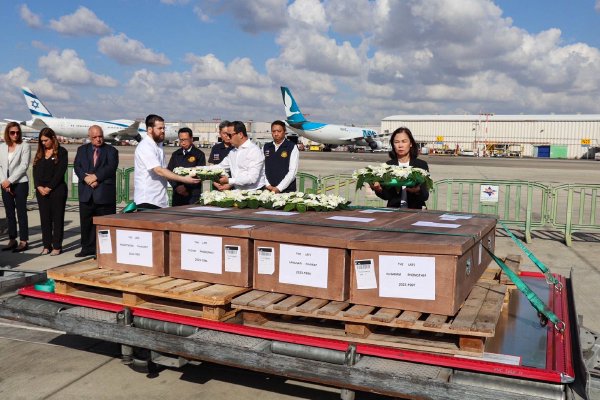
Unlike Beijing, which refrained from condemning Hamas, Taiwan was among the first to denounce the October 7 massacre. Both then-President Tsai Ing-wen and current President Lai Ching-te issued strong statements. Taiwan’s representative in Tel Aviv, Abby Lee, even volunteered in Israeli agricultural fields and met with families of hostages.
This solidarity stems from shared experience: just as Israelis have defended themselves against hostile neighbors for decades, Taiwanese live with constant fear of Chinese invasion. China has never recognized Taiwan’s independence and continues threatening reunification by force.
Complex Historical Ties#
The historical relationship between Israel, Taiwan, and China reveals complex diplomatic evolution. In 1949, the Republic of China (Taiwan’s government) recognized the newly created State of Israel. But in 1950, Israel recognized the People’s Republic of China, becoming the first Middle Eastern country to acknowledge the communist regime.
For decades, Israel and Taiwan avoided official diplomatic relations despite growing cooperation in missile technology, nuclear technology, aerospace, agriculture, and trade. Both countries faced pressure—Israel sought better relations with Beijing, while Taiwan competed with China for Arab diplomatic support.
Why China Supports Palestine#
According to Chris King, a senior researcher at MEMRI’s Chinese Media Studies Project and former Tiananmen Square protester, Beijing’s pro-Palestinian stance primarily serves geopolitical opposition to the United States. In 1965, Mao Zedong compared Israel to Taiwan, calling both countries creations of “imperialism.”
Ironically, those who helped Jews during World War II were the Kuomintang government (now in Taiwan), not the Chinese Communist Party. Taiwan issued “lifetime visas” to European Jews fleeing Nazi Germany and planned Jewish settlements in Yunnan Province in 1939.
Shared Destiny, Different Preparedness#
King warns that Taiwan cannot defend itself militarily without American support, unlike Israel’s self-reliant defense capabilities. “Most Taiwanese today are content with a life of little wealth and lack the military spirit of the Israelis,” he notes. “The Taiwanese military basically believes that as long as its own troops can delay the advance of the Chinese army, it can be considered a success.”
This contrasts sharply with Israel’s total defense philosophy where all citizens serve and remain prepared for conflict. Taiwan’s military service system, King argues, cannot guarantee sufficient soldiers if war breaks out.
Economic Contradiction#
Despite supporting Palestine and Iran, China maintains profitable trade with Israel. King explains this as Xi Jinping’s realism: “Although his regime always denounces Israel verbally, he is essentially putting on a show in front of the world to appease Arab countries. But behind the scenes, he does not dare to be too tough on Israel.”
China’s economy struggles, making Xi reluctant to completely antagonize Israel, especially when Beijing seeks improved relations with the West.
Invasion Likelihood#
King predicts Xi Jinping will definitely attempt to take Taiwan during his tenure, but not immediately. China needs time to recover economically from COVID-19 mismanagement and achieve military advantage over the U.S. and its allies.
The most effective Western deterrent? Economic independence from China. “If this goes wrong, the CCP’s grip on power in China could be shaken,” King argues. “Only in this way can Xi give up the idea of taking over Taiwan.”
Lessons for Both Nations#
The Israel-Taiwan relationship demonstrates how shared values and parallel challenges can forge powerful alliances despite official diplomatic constraints. Taiwan admires Israeli resilience and technological prowess. Israel recognizes a fellow democracy facing existential threats.
As both countries navigate hostile regional environments, their cooperation in technology, defense innovation, and mutual moral support offers hope that small democracies can survive—and thrive—in hostile neighborhoods.
Source: Ynet News